
October 12, 2026 · otomakeit-oracleeplanecadelectrical-designcontrol-systemsai
When people hear “AI for electrical design”, they picture typing a prompt and getting an EPLAN project. That’s not what I’m building at Otomakeit, and that choice is the decision everything else depends on.
A schematic is a view of a design
A schematic isn’t the design itself. It mixes three different things:
- what the system is: devices, connections, ratings, behaviour
- how it’s drawn: symbols, pages, layout
- what the tool needs: macros, databases, numbering formats
If an AI writes straight into a drawing tool, the engineering ends up locked inside one vendor’s file format, and nobody can check it without opening the drawings.
And when the drawing is the master, every change has to be repeated by hand in the BOM, the I/O list and the PLC tags.
The model comes first
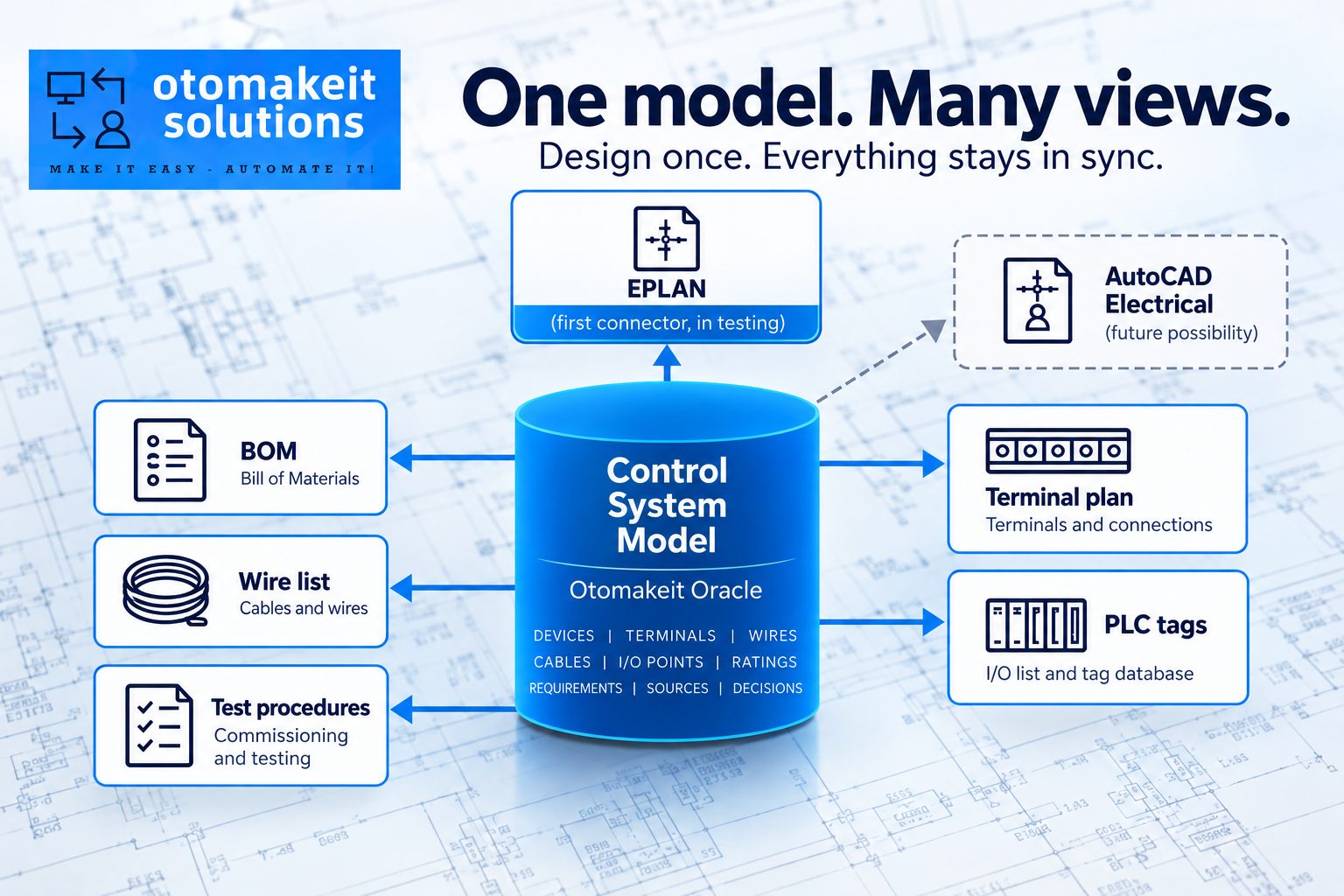
So the core of my system, Otomakeit Oracle, is a database: a complete model of the control system.
Every device, terminal, wire, cable, I/O point and rating is in it, along with where it came from: a requirement, a source document or a design decision. That’s where the design is done and where it’s checked.

Drawings come last. A connector reads the finished model and builds the native project in an ECAD tool.
When I first wrote this, that was EPLAN, with AutoCAD Electrical as a possibility. To change the tool, I change the connector. The design stays the same. The next article shows the same test model built by three connectors.
On my test systems, the same model already generates the BOM, wire lists, terminal plans, PLC tags and test procedures. One source of truth, many views: change it once and everything regenerates.
None of this is secret
In my experience, engineers have talked about “model first, drawing second” for years. What’s new is that AI agents now make building and maintaining that model practical.
How much of your week goes into keeping drawings, BOMs and I/O lists in sync with each other? The other Oracle articles are collected on the Otomakeit Oracle page.
First published on LinkedIn on 12 October 2026.
